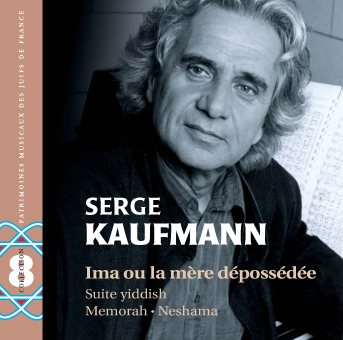
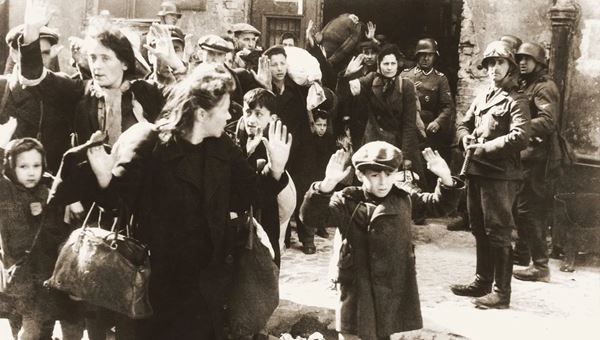
Born in 1930, Serge Kaufmann studied classical music at Collège Calvin in Geneva, and then at the Schola Cantorum in Paris, under the direction of Daniel Lesur. In the post-war years, the sight of a photograph – the boy in the Warsaw Ghetto – pivoted his convictions a passionate, internal questioning whose voice became ever more insistent: “What would have happened to me if, instead of being born in Switzerland, I had been born on the other side of the border? Would I not have shared the fate of these thousands of Jewish children who didn’t have the chance to grow up simply because they were born of Jewish parents or grand-parents!”
Inspired by this revelation, Serge Kaufmann has enriched for nearly 25 years the field of Jewish music by composing works with evocative names: Suite Yiddish, Petite suite klezmer, Le Maharam de Rothenbourg, Neshama, Kol nidré, Yesod… Although never built on purely traditional melodies, his compositions have a sound that is undeniably Jewish.
In September 2025, the IEMJ published twelve new scores by Serge Kaufmann in paper or digital format for various instrumental and vocal ensembles. These include Ahava, a lyrical violin piece; Tikva, a cello piece; and the oratorio Un matin à Varsovie (One Morning in Warsaw), inspired by the infamous photograph of the boy in the Warsaw ghetto and set to Kaufmann’s poignant text.
Consult and order these scores on the IEMJ store:
Ahava, Lyrical song for solo violin
L’avenir foudroyé, Oratorio for mezzo-soprano, strings, and narrator
Cantando, Recital for 5 cellos
Matsevah, Elegiac song for viola and string orchestra
Tchelane, for cello ensemble
Tekhina, Imploration for trumpet and string orchestra
Cantabile, 3 songs for cello, string orchestra and harpsichord
Con affetto, 3 pieces for string orchestra
Contrastes, for trumpet, organ, strings and percussion
Et si un jour, Song-Cantata for choir, solo soprano and string orchestra
Tikva, Song for solo cello
Un matin à Varsovie, Oratorio for soprano, narrator, cello, and 13 instruments
The IEMJ’s publications are supported by the Fondation du Judaïsme Français and the Fondation pour la Mémoire de la Shoah.
Listen to audio excerpts from: