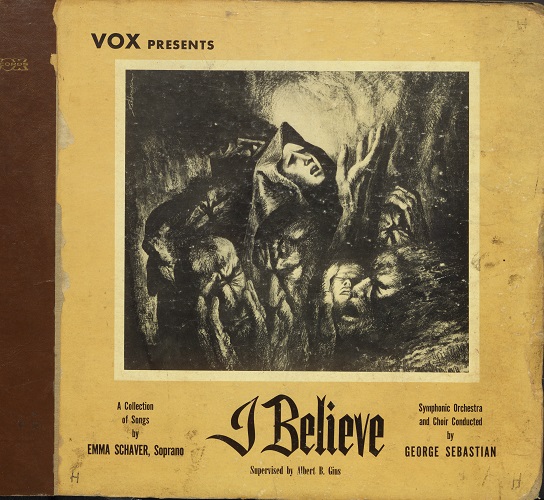
Album of 3 78 rpm records
By Emma Schaver
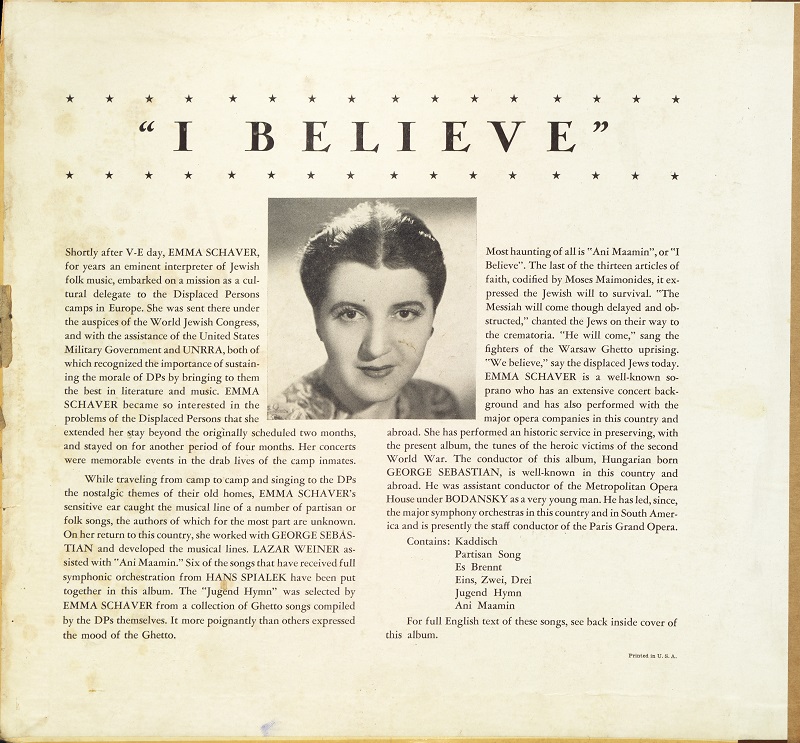
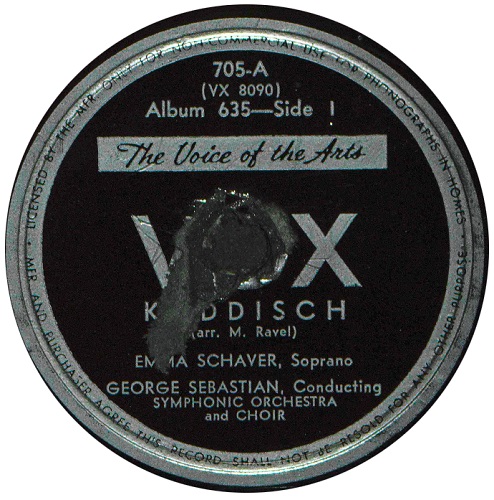
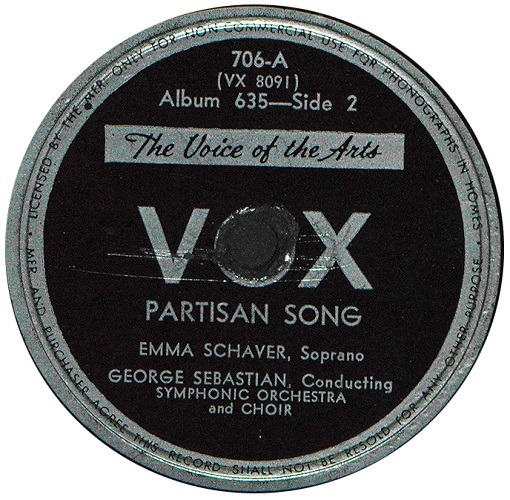
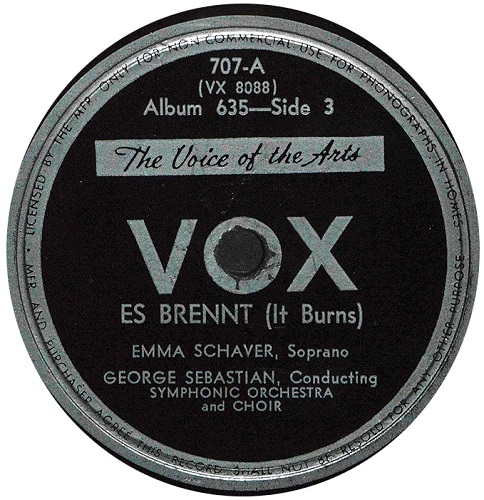
Released shortly after World War II, I Believe is a box set of three 78 rpm records (30 cm, mono), featuring six songs from the Jewish resistance and the ghettos of Eastern Europe. Each side of the record features one song, for a total of six tracks emblematic of the memory of the Holocaust.
Performed by American soprano Emma Schaver, these songs were collected during a cultural mission she led in 1945-1946 in displaced persons camps (DP camps) in Europe, under the auspices of the World Jewish Congress and with the support of UNRRA and the US Army. Deeply moved by the stories and songs passed down by the survivors, she extended her mission by several months in order to collect this poignant repertoire.
The orchestral arrangements are by George Sebastian, a Hungarian-born conductor who was then at the helm of the Orchestre National de Paris. Among the titles are Ani Maamin, Jugend Hymn, and above all the famous Partizaner lid (Zog nit keynmol) written by Hirsch Glick in the Vilna ghetto. The title of the box set takes its name from this song, which became a symbol of Jewish resistance.
The box set’s hardcover is illustrated with a painting depicting the suffering of the Jewish people. This rare recording, which constitutes an exceptional audio testimony collected firsthand from Holocaust survivors, comes from the Bernard Vaisbrot collection (who notably donated the MEDEM and Batia Baum), some of which are of particular interest.