By Hervé Roten
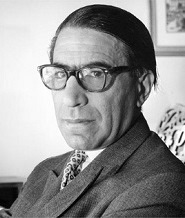
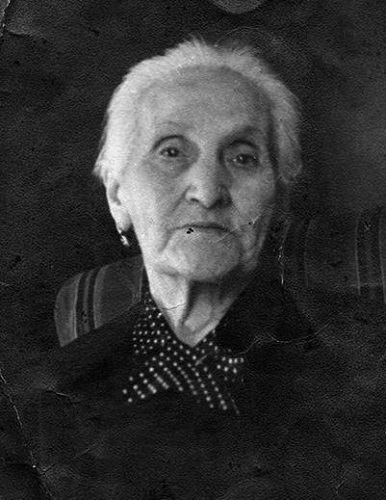
Born into an integrated Hungarian Jewish family[1]In 1898, as part of Emperor Franz Joseph’s emancipation of Jews in the Austro-Hungarian Empire, József’s father, Bernát Kohn, Magyarized his name, keeping only the initial: Bernát Kohn … Lire la suite József Kosma was born on October 22, 1905, in Budapest. His grandmother, Hermina Naschitz, who had studied piano with Franz Liszt, encouraged her children and grandchildren to study music. Passionate about art and theater, József Kozma staged shows with his aunt Julianna, a pianist, and began composing at the age of 11. József Kozma’s uncle, the composer Hugo Kellen, introduced his nephew to the composer Léo Weiner, who encouraged the child to persevere in music.
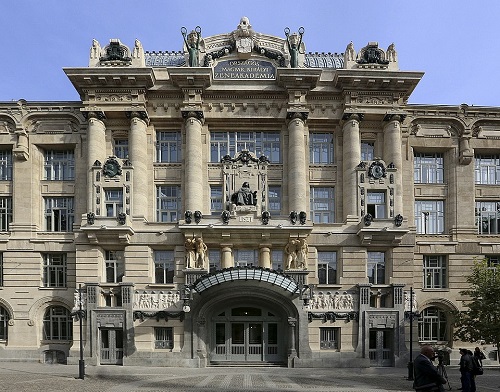
During the 1920s, anti-Semitism increased. At the François-Joseph High School, the most prestigious school in Budapest, he was frequently subjected to racist bullying, insults, and fights. He was then prevented from pursuing his university studies in literature and philosophy due to a numerus clausus limiting the number of Jewish students. He therefore turned to music and took courses in musical composition with Léo Weiner (1885-1960) and Albert Siklós (1878-1942) at the National Academy of Music in Budapest. After graduating with a degree in composition, he became assistant conductor at the Budapest Opera (1927-1928), before becoming artistic director of the small avant-garde theater Cikk-Cakk (Zig-Zag), whose daring performances, typical of the Roaring Twenties, were quickly censored.
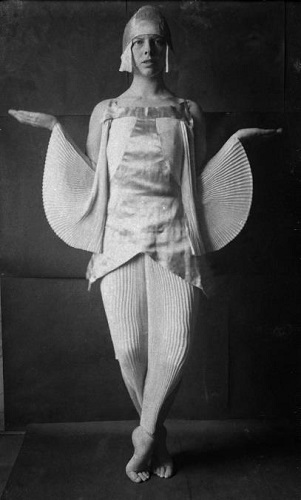
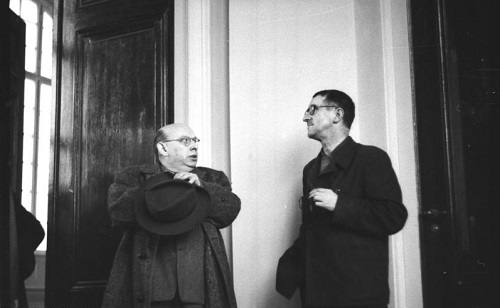
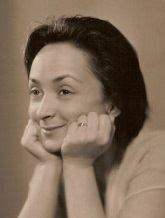
After obtaining a scholarship in 1929, Kosma continued his career in Berlin, where he studied under Hanns Eisler (1898-1962). He then became friends with playwright Bertold Brecht (1898-1956) and composer Kurt Weill (1900-1950) [2]Eisler and Weill, who were Jewish, and Brecht, who was a communist, went into exile in the US during the Nazi period. Both were involved in promoting popular music, as was pianist Lilli Apel (1891-1975), whom he officially married in 1939.
In 1933, the Kosmas escaped Nazism and found refuge in France. Settling in Paris without a penny to their name, Lilli gave piano lessons and József accompanied dance classes. In 1935, in the waiting room of a film producer, he met the poet Jacques Prévert (1900-1977) and told him that he wanted to write songs. He gave him his address. Several months passed, and one day Prévert brought him two texts, which Kosma quickly set to music. Impressed, Prévert introduced Kosma to directors Jean Renoir and Marcel Carné.
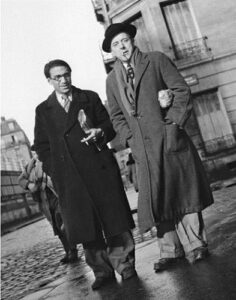
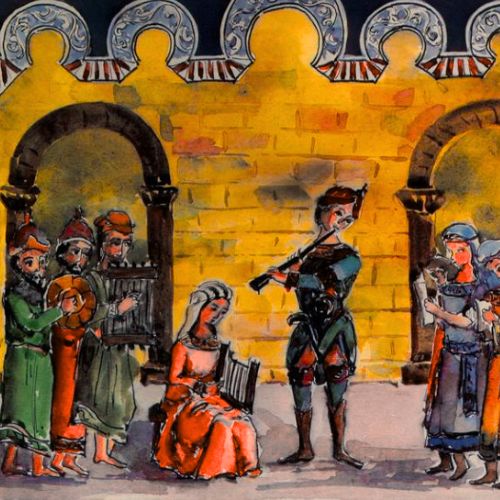
For the latter, he composed the music for Jenny in 1936; for Jean Renoir, he composed the music for La Grande Illusion in 1937. The 1930s also provided Kosma with an opportunity to showcase his talents as a folklorist, [3]Following in the footsteps of Béla Bartók, who collected Hungarian folk music in the early 20th century. In 1932, he composed a 14-piece Suite Exotique for piano, inspired by African, Arabic, and Chinese themes, published in 1936 by Pro Musica, followed in 1937 by a Suite Suédoise based on old folk songs (15th and 16th centuries) for piano and various instruments, published by Eschig.
In 1940, as the German army approached Paris, Prévert convinced his Hungarian friends and collaborators (Kosma, Brassaï, Trauner) to leave the capital and seek refuge in the south. After several temporary stops, Kosma and his wife found refuge with a family in Navarrenx, in the Béarn region. To thank them, Kosma composed Esquisses Béarnaises: chants et danses des Pyrénées, a short suite for piano in eight movements dated 1940, published by Editions Henn in Geneva to avoid the systematic plundering of Jewish composers in France by SACEM.
After Navarrenx, the Kosmas stayed in Palavas-les-Flots, in an uncomfortable chalet where they suffered from the cold. With nothing to do, the composer frequented the library in Montpellier, where he chose a few popular songs that he arranged for violin and piano. Three of them were premiered on March 16, 1941, in Palavas, during a concert given to benefit prisoners of war.
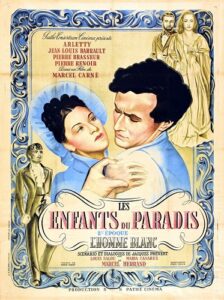
Joseph Kosma reunited with Prévert in Tourrettes-sur-Loup in the Alpes-Maritimes, where he composed the music for two of Marcel Carné’s most famous films: Les Visiteurs du soir and Les enfants du Paradis. Unable to sign them as a Jew, he used pseudonyms such as pianists and composers Georges Mouqué (1901-1961) and Jean Marion (1912-1967). After the evacuation of the French Riviera by the Italians in September 1943, Kosma joined the Thorenc maquis in the Alpes-Maritimes. On August 28, 1944, he was wounded by a mine explosion above Vence. His family, who had remained in Budapest, was decimated by the Hungarian Nazis in the last days of 1944.
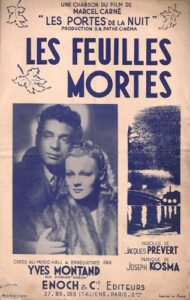
Returning to Paris in October 1944, Kosma became a renowned composer with the triumph of Les Enfants du Paradis, released in March 1945. The following year, he set 46 songs from Prévert’s poetry collection Paroles by Prévert to music, which were published by Éditions Enoch in 1946 and 1947. The most famous (Les Feuilles Mortes, Barbara, Je Suis Comme Je Suis, À l’Enterrement d’une Feuille Morte, etc.) were sung for twenty years by renowned performers such as Mouloudji, Les Frères Jacques, Yves Montand, Francis Lemarque, Germaine Montero, Juliette Gréco, Cora Vaucaire, Catherine Sauvage, and others. The 1949 cover of Les Feuilles mortes in the United States, under the title Autumn Leaves, with lyrics by Johnny Mercer, made it a standard that would be performed by the biggest names in song and jazz.
In October 1948, Joseph Kosma obtained French citizenship, one year after meeting Marie Merlin, his new partner who would assist him in his work and struggles for nearly a quarter of a century. Despite his painful separation from Prévert in 1951, the 1950s were an intense period of creativity for the composer, with several well-known songs based on poems by Sartre, Queneau, Aragon, and Desnos, as well as other works waiting to be rediscovered, written to texts by Jean-Marie Croufer, Henri Bassis, and Madeleine Riffaud, the latter two being former communist resistance fighters.
The success of Kosma’s film scores and melodies overshadowed, much to his regret, his symphonic music, particularly ballets such as Le Rendez-vous, premiered in Paris in 1945 and choreographed by Roland Petit, and L’Écuyère (1948), choreographed by Serge Lifar for Yvette Chauviré. He also composed two operas: Les Canuts (1959) and Les Hussards (1969). However, Kosma died of a heart attack on August 7, 1969, in La Roche-Guyon (Val-d’Oise) before he could attend the premiere of the latter in Lyon on October 21, 1969.
Sources:
- Bruno Brévan, CD booklet Joseph Kosma, A la belle étoile, Edition Hortus, December 2025
- Christine Jolivet Erlih, Evocation de Joseph Kosma
- Elise Petit and Bruno Giner, Entartete Musik, Bleu nuit éditeur, 2015
- Joseph Kosma, Wikipédia page
Listen to excerpts from the CD Joseph Kosma, A la belle étoile
| 1 | In 1898, as part of Emperor Franz Joseph’s emancipation of Jews in the Austro-Hungarian Empire, József’s father, Bernát Kohn, Magyarized his name, keeping only the initial: Bernát Kohn thus became Bernát Kozma. In 1905, the year József was born, he and his wife Zelma founded a school for stenography and stenotype typing and published several methods for learning stenography. |
|---|---|
| 2 | Eisler and Weill, who were Jewish, and Brecht, who was a communist, went into exile in the US during the Nazi period. |
| 3 | Following in the footsteps of Béla Bartók, who collected Hungarian folk music in the early 20th century. |