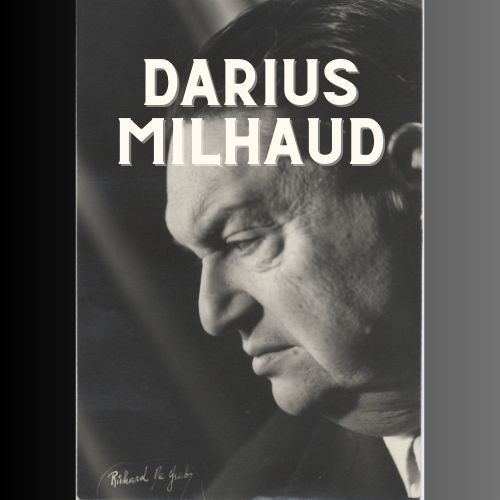
Born in Marseille on September 4, 1892, Darius Milhaud came from an old Jewish family in the Comtat Venaissin region of France. Author of a prolific oeuvre (443 opus numbers!), Darius Milhaud tackled every genre: opera, chamber music, symphonic music, concertos, ballets and vocal music. His musical language is marked by polytonality and polyrhythm. He draws his inspiration from jazz, Brazilian, African and Provençal Jewish music. He defines himself as “French from Provence and of Israelite religion”.
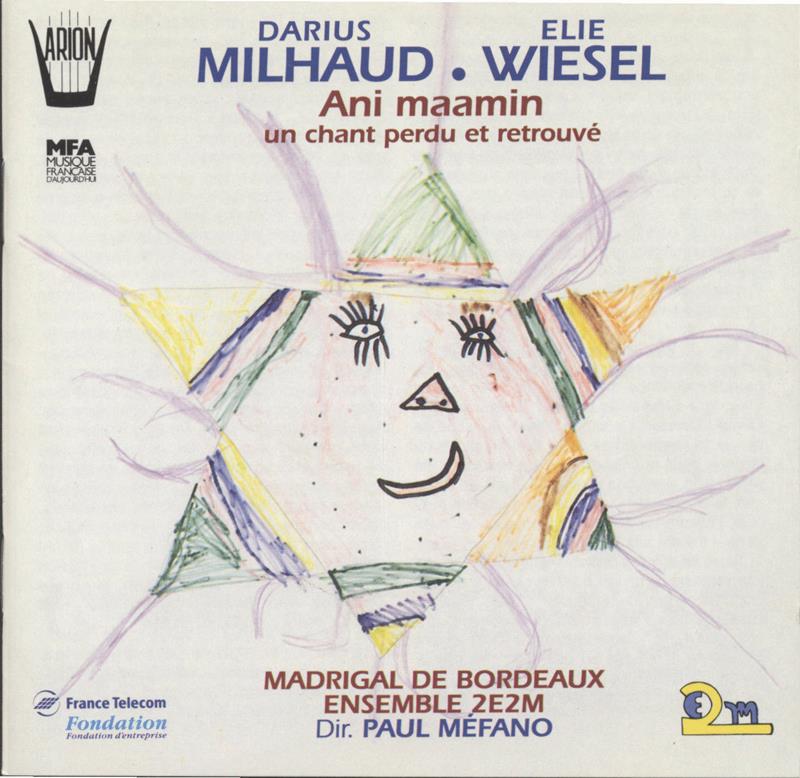
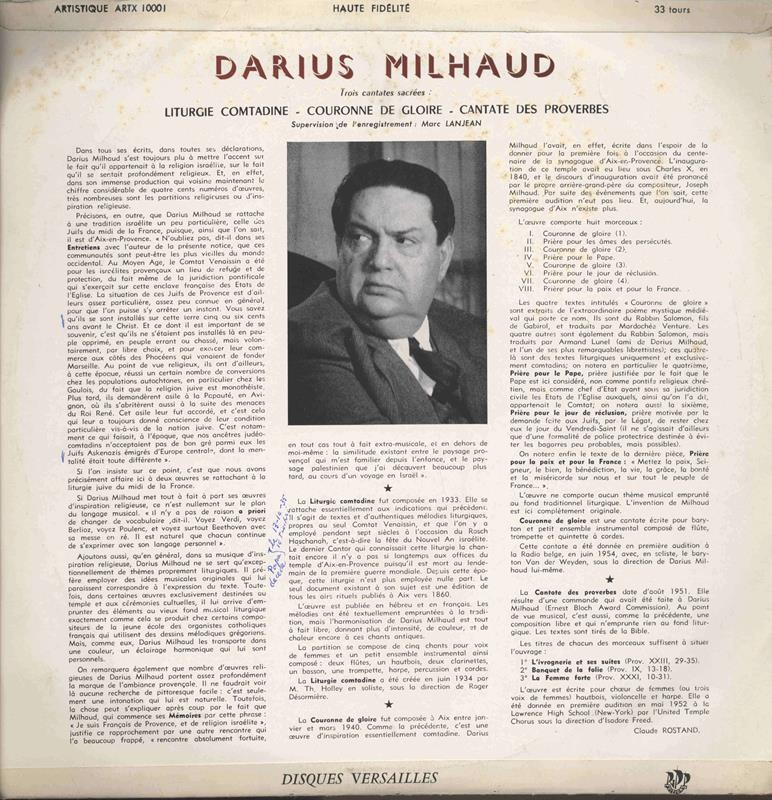
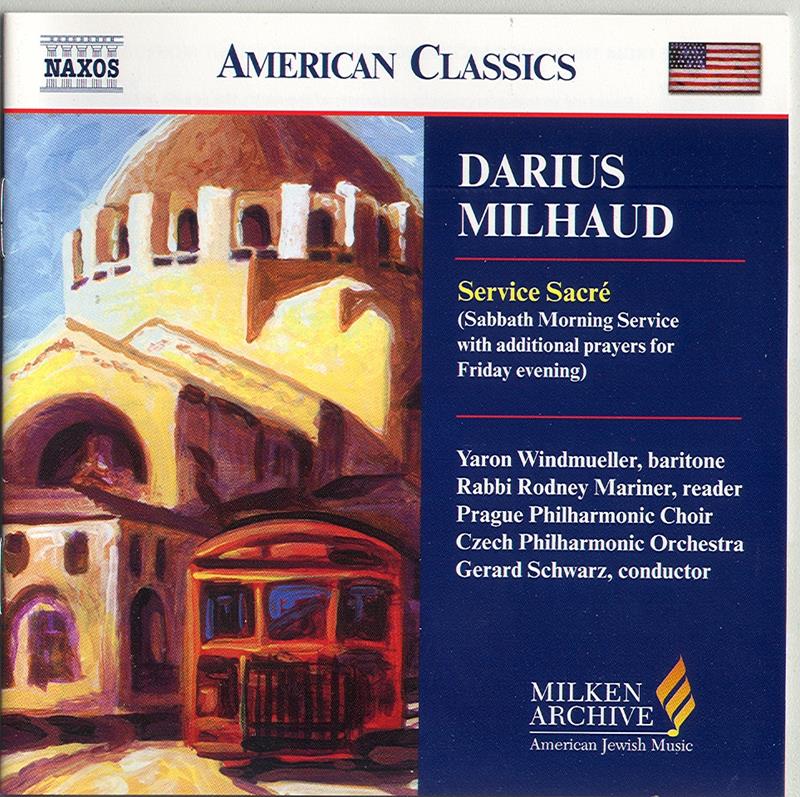
Written between 1916 and 1974, Milhaud’s Jewish-inspired works are mainly vocal. They are rooted in Judeo-Comtadin traditions, such as Poèmes juifs (1916), the opera Esther de Carpentras (1925-1927), Chants populaires hébraïques (1925), Prières journalières à l’usage des Juifs du Comtat Venaissin  (1927), Liturgie comtadine (1933), Cantate nuptiale (1937), Couronne de gloire (1940)… The Second World War, and Milhaud’s exile to the USA in 1940, led to a broader awareness of his Jewishness, which is reflected in his later works: Borechou-Schema Israel (1944), Kaddish (1945), Service sacré pour le samedi matin (1947), Lekha dodi (1948), Cantate des Proverbes (1951), Le Candélabre à sept branches (1951), the oratorio David composed in 1952-1953 for the third millennium of Jerusalem in 1954, Le Dibbouk (1963) or the cantata Ani Maamin (1972) on a text by Elie Wiesel, which recounts the horrors committed at Auschwitz. Treblinka, Maidanek… places where more than twenty of the composer’s cousins perished.
The playlist below features excerpts from several of his iconic Jewish works, among them the Etude sur des thèmes liturgiques du Comtat Venaissin, the Chants populaires hébraïques, the Cantate des proverbes, Couronne de gloire, Ani Maamin, Caïn et Abel, as well as various Hebrew prayers (Lekha dodi, Adon olam…)
Read Darius Milhaud’s biography
Read the article Le Candélabre à Sept branches by Darius Milhaud