By Jean-Philippe Amar
Jean-Philippe Amar studies in the University of Paris IV Sorbonne and prepares a PhD on the cantilation of the Thora the Jewish communities of Paris.
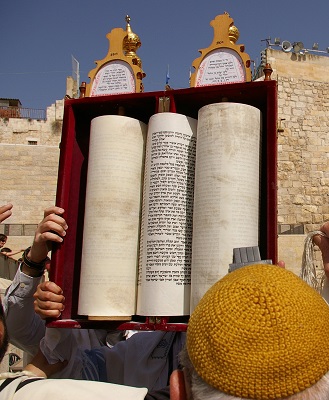
The reading of the Torah, the Pentateuch, a usage that would go back to the time of Moses, has become since Esdras the Scribe (5th century before our era) the main moment of the synagogal worship. A pericope is sung during the sabbath morning service every week, following a yearly cycle of readings which divides the text in 54 parts (parasha).
This sung reading, despite the variety of rits of interpretation, is based on the same system of the teamim, developed by the masoretes in Tiberiasa in the Middle Ages. The teamim are diacritic signs indicating, but not strictly, a way of singing the words and dividing the verses. Each taam proposes a melodic formula, not very precise, which allows to the perfomer some liberty, but still respecting the text he has to pass on to the worshippers.
This article is a reflexion on the principles of the Jewish cantilation, with the ideas of transmission of the divine message, the interpretation of the latter, and of the creation of meaning in a hermeneutic approach of the practice of ritual sung reading.
“Réflexions sur la Thora cantilée”, Jean-Philippe Amar