By Hervé Roten
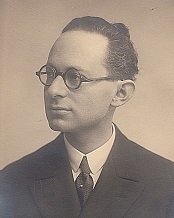
Born in 1895 in Florence to a Sephardic Jewish family, Mario Castelnuovo-Tedesco was given piano lessons by his mother and began composing as early as nine years old. Between 1909 and 1918, he studied at the Istituto Musicale Luigi Cherubini in Florence under Edgrado Del Valle de Paz. He then studied composition at the Conservatory of Bologna with Ildebrando Pizzetti. After the 1920s, he not only developed an intense activity as a pianist, a composer, and also as a musical critic. His compositions were performed throughout Europe.
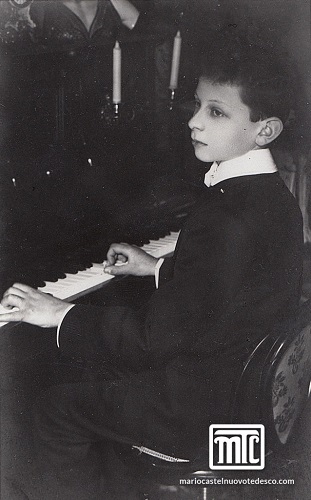
His first major work―La Mandragola, a comic opera based on Machiavelli’s play and created at the Fenice of Venice in 1926―was awarded the Prize of the Concorso Lirico Nazionale. In 1932, his encounter with the Spanish guitarist Andrés Segovia encouraged him to write his first pieces for the guitar (Variazioni attraverso i secoli, Concerto pour guitare n° 1, etc.), which would become his favorite instrument to which he would dedicate nearly one hundred of his compositions.
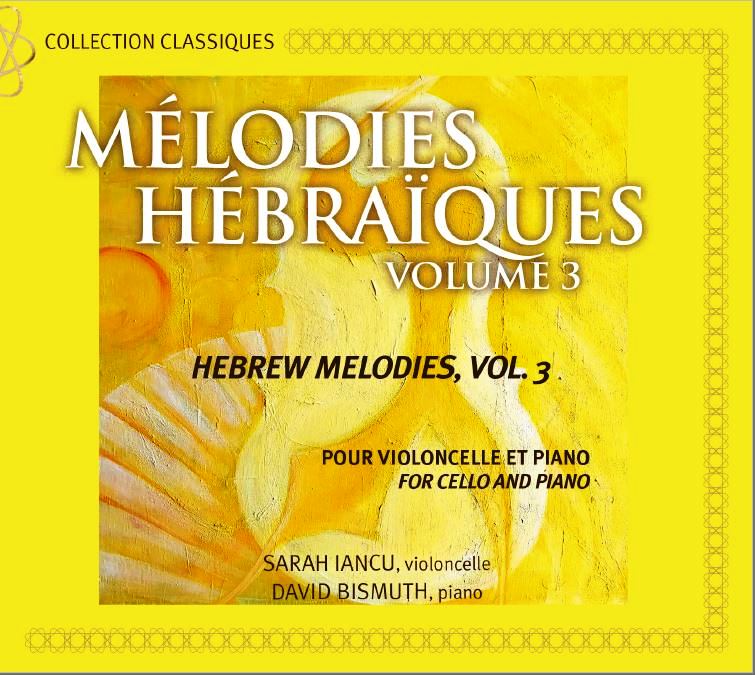
Another source of inspiration was related to his Jewish identity. Many years after the death of his maternal grandfather, he discovered a little notebook in which the latter had written down the music of several Hebraic prayers. This discovery, which according to his account, constituted “one of the most profound emotions of my life… a precious heritage”, inspired his first Jewish composition, the Hebraic rhapsody Le Danze del Re David for solo piano (1925), as well as numerous other works such as Three Chorales on a Hebrew Melody (1926), Hebrew Song: Vocalise (1928), his second concerto for violin, Profeti (1931), written in homage to Jascha Heifetz, two Lecho dodi (1936 and 1943), two Kol Nidrei (1941 and 1942), a Sacred Service for the Sabbath Eve (1943), Naomi and Ruth (1947), Three Sephardic Songs (1949), The Book of Jonah (1951), Songs of the Shulamite (1953), The Book of Proverbs (1953), The Stories of Joseph (1955), The Song of Songs (1955), Saùl—a biblical opera in three acts (1958–60; never performed),The Book of Esther (1962), or also Prayers My Grandfather Wrote (1962).
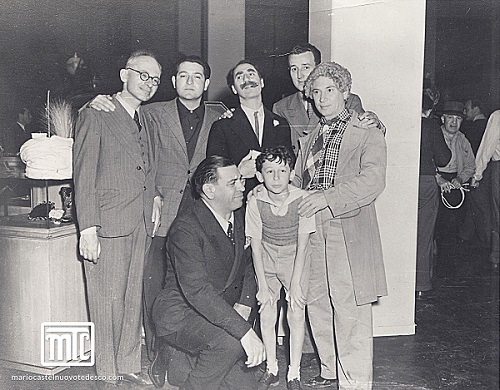
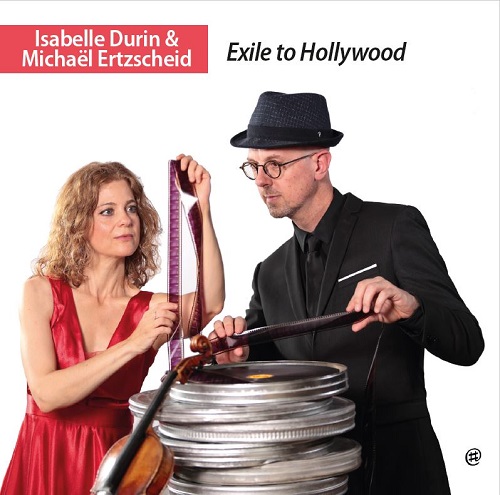
In addition, his Jewish origins also obliged him to leave Italy for the United States in 1939 to flee the anti-Semite policy of Mussolini’s regime. He settled in Hollywood, where he taught at the Los Angeles Conservatory of Music and wrote the music for more than two hundred films. The style of his music―described as progressive, post-impressionist, neo-romantic or even neo-classic―has influenced numerous Hollywood composers, particularly Henry Mancini, Jerry Goldsmith, Nelson Riddle, John Williams and André Previn.
Mario Castelnuovo-Tedesco died on March 16, 1968 in Beverly Hills, California.
Sources:
- Wikipedia https://en.wikipedia.org/wiki/Mario_Castelnuovo-Tedesco
- Neil Lewin, Milken Archive https://www.milkenarchive.org/artists/view/mario-castelnuovo-tedesco/
- Official site of Mario Castelnuovo-Tedesco https://mariocastelnuovotedesco.com/#