
JEWISH MUSIC THROUGH TIMES AND SPACE, FROM THE BIBLICAL ERA TO THE PRESENT DAY
With the support of the Fondation Henriette Halphen, under the aegis of the Fondation du Judaïsme Français
SUNDAY, OCTOBER 18, 2026, at 5:30 p.m.
Salle Cortot – 78 rue Cardinet, 75017 Paris
The European Institute of Jewish Music is celebrating its 20th anniversary (2006–2026). To mark the occasion, the EIJM is organizing a special concert that will take us on a journey through time and space. From the sound of the shofar to biblical cantations and the Psalms of David, from the earliest musical notations of the Middle Ages to Baroque, Classical, and contemporary Jewish music, from the music of the Mediterranean region to the shtetls of Eastern Europe, from Judeo-Spanish songs to Yiddish and Oriental songs, not to mention klezmer, this concert-event offers an initiatory journey through Jewish music from here and elsewhere.
The concert will be followed by a cocktail reception with the artists (reserved for Gold and Silver ticket holders).
Program
Biblical Period
- Shofar Blasts
- Bereishit: Biblical cantillation of the first verse of Genesis, performed according to various traditions
- – 4 Lamnatsea’h binginot al-hashminit, Mizmor leDavid (ps. 6) and Alléluia (ps. 150)
Middle Ages and Baroque – 12th to 18th centuries
- Mi-al har horev : 12th-century religious poetry (piyyut) by Abdias, the Norman proselyte
- Maoz tsour by Benedetto Marcello (a melody collected in the early 18th century in the Venice Ghetto)
- Keter by Salomon Rossi (Mantua/Venice – 1622–23)
- Hishki hiski by Abraham Caceres (Amsterdam – first half of the 18th century)
Emancipation – 19th Century
- Baroukh haba by Alphonse Perpignan (1819? – after 1885) (Portuguese rite)
- Vayehi binsoa d’Emile Jonas (1827 – 1905) (Portuguese rite)
- Veal yede avadeikha / Zarakhti lakh by Louis Lewandowski (1821 – 1894) (Ashkenazi rite)
Music from the Maghreb and the Ottoman Empire
- Elie Eliahou – Piyyut from Algeria
- H’alaf – Piyyut in Hebrew and Arabic
- Montanas altas y maridanas by Mario Castelnuovo-Tedesco (1895 – 1968)
- Ah, el novio no quere dinero! by Alberto Hemsi (1896 – 1975)
INTERMISSION
Hasidic, Klezmer, and Yiddish music
- Az ikh vel zogn Lekho Dodi
- Kale baveinen “Veyn kaleniu”
- Kale bazetsn “Dovid bazets di kalekh”
- Runaway Bulgar
- Fuhren di mehutonim aheim
- Nign Bialik
Jewish Music: A Source of Inspiration and Creativity
- Andante religioso by Fernand Halphen (1872 – 1917)
- Kaddisch by Maurice Ravel (1875
- Zaït gezunt by Léon Algazi (1890 – 1971)
- Der Rebele, der Gabele by Louis Aubert (1877 – 1968)
- Balade klezmer by Serge Kaufmann
- Hashkivenu by Itaï Daniel
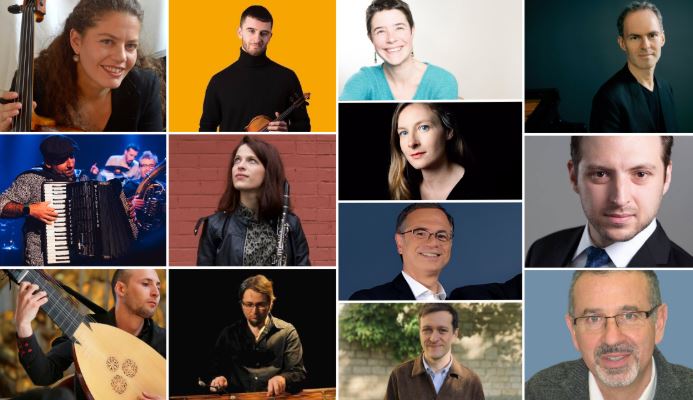
Cast
- Alexandre Cerveux (tenor)
- Ian Pomerantz (bass)
- Marine Beelen (soprano)
- Marielou Jacquard (mezzo-soprano)
- Philippe Darmon (liturgical and Eastern chant)
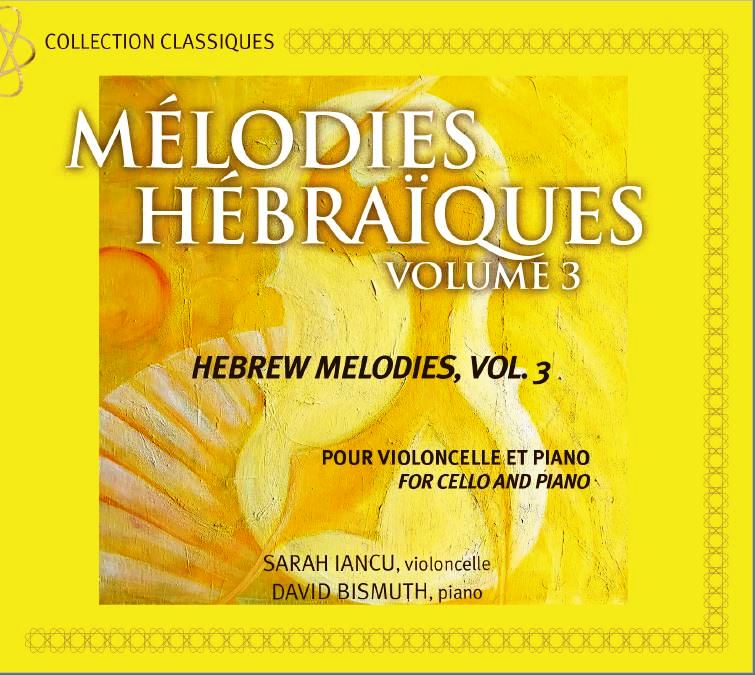
- Sarah Iancu (cello)
- David Bismuth (piano)
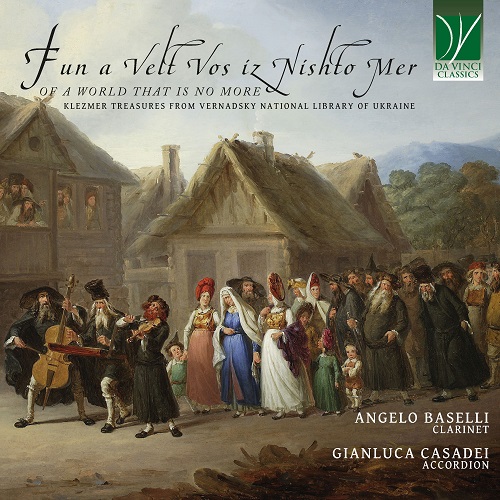
- Marine Goldwaser (clarinet), Elie Hackel (violin)
- Adrian Iordan (accordion)
- Mihai Trestian (cymbalum)
- Romain Falik (theorbo and oud)
- Hervé Roten – Narrator
Concert followed by a cocktail reception with the artists (reserved for Gold and Silver Section ticket holders).
Fees : 15 €* – 25 € – 50 €** – 100 €** – 200 €**
* Fee for members of EIJM with their membership updated (limited number of tickets) – Purchasable only by bank check ordered to IEMJ, 29 rue Marcel Duchamp – 75013 Paris
** with receipt Cerfa on the donation part, which represents the price of the ticket minus 15 €
(Example : for a 100 € ticket, a Cerfa receipt of 85 € will be given)
Practical information:
SALLE CORTOT, Ecole Normale de Musique de Paris, 78 rue Cardinet, 75017 Paris
Tél : + 33 1 47 63 47 48
https://sallecortot.com/

Accessibility: As a historic building, the Salle Cortot unfortunately does not have wheelchair access. Please feel free to contact us before your visit if you have any questions.
Access:
Métro : ligne 3, station Malesherbes | ligne 2, station Monceau
Bus : lignes 31, 94 | Voiture : parking Villiers, 14 avenue de Villiers | Taxi : station au 155 bd Malesherbes
Vélib’ : 64 rue de Tocqueville ou 20 rue de Phalsbourg
You can also support the European Institute of Jewish Music by making an online donation