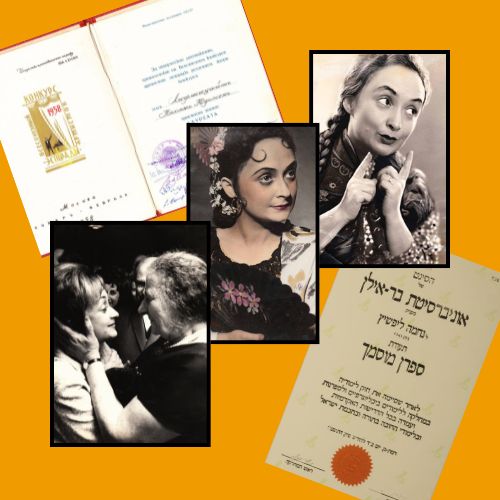
Born on October 7, 1927, in Kaunas, Lithuania, into a Zionist Jewish family deeply devoted to culture—and to music in particular—Nehama (or Nechama) Lifshitz is one of the great Yiddish voices of the 20th century. Having fled with her parents and sister to Uzbekistan during World War II, she began studying music at the Vilnius Conservatory after the war. Blessed with an exceptional soprano voice, she quickly launched a career as a solo singer.
From 1956 onward, she began singing in Yiddish. This artistic choice held particular significance in the Soviet context, where public expression of Jewish culture remained severely restricted. Associated with Yiddish culture and song, Nehama Lifshitz became an iconic figure for Soviet Jews, expressing through music their attachment to their identity and their aspiration to emigrate to Israel. In 1964, she began singing openly in Hebrew on stage, before settling permanently in Israel in 1969.
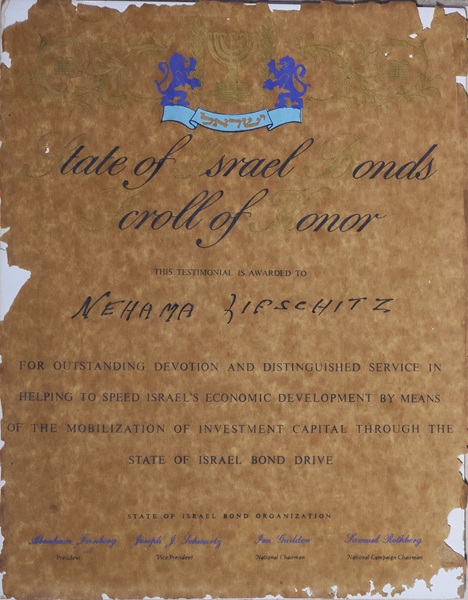
In her new country, she continued her artistic career and contribut to enriching the Israeli musical repertoire through her performances of songs in Yiddish and Hebrew. She also performed songs associated with Jewish dissidents in the Soviet Union, particularly those of the Prisoners of Zion and the Refuzniks. Her commitment to Yiddish culture also extended to the field of education. In 1998, she founded a Yiddish song and poetry workshop aimed at passing on this heritage to younger generations.
Nehama Lifshitz passed away on April 21, 2017. She dedicated her life to preserving and transmitting Yiddish culture, which the totalitarian regimes of the 20th century had sought to erase.
Her archive, donated to the IEMJ by her daughter Roza Litay in March 2026, consists mainly of photographs and other autobiographical documents that bear witness to the role Nehama Lifshitz played in the transmission of Yiddish song in Eastern Europe and later in Israel.