By Lori Șen
On June 25, 2026, the National Archives in Paris will host a concert by Bass-Baritone Ian Pomerantz, accompanied by Juliette Sabbah (piano), Renato Kamhi (violin), and Nicolas Chabot (oud), that places two worlds side by side: the intimate, orally-transmitted folk songs of the Sephardic Jewish communities, and the polished arrangements of those very same melodies by 20th-century composers.
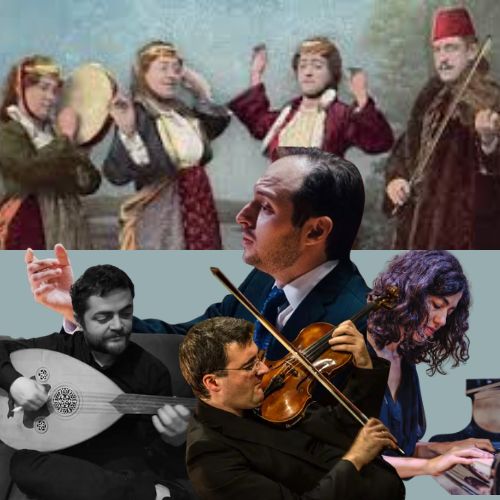
Organized by the European Institute of Jewish Music, Aki Estamos and the FSJU, the program will feature works by composers such as Alberto Hemsi, Léon Algazi, Joaquín Rodrigo, and Mario Castelnuovo-Tedesco, who found in the Judeo-Spanish folk tradition something worth elevating, preserving, and sharing with Western classical concert audiences around the world.
How did these songs travel from homes and gathering places of Sephardim into the world of classical music? The journey spans five centuries, multiple continents, and one of the most remarkable stories of cultural survival in Jewish history. Sephardic Art Song represents a modern artistic preservation and transformation of Sephardic diasporic identity, language, and cultural memory within the Western classical tradition.
The Traditional Repertoire of Sephardic Songs
The word Sephardim comes from Sepharad, which means ‘Spain’ in medieval Hebrew. The Sephardim are the descendants of Jews expelled from the Iberian Peninsula in 1492, when King Ferdinand and Queen Isabella gave Spain’s Jewish population a stark choice: convert to Christianity or leave. As a result, around 300,000 Jews went into exile, scattering across the Mediterranean world, into the Ottoman Empire, North Africa, the Balkans, the Netherlands, and beyond. They carried little with them in the way of material possessions; what they carried above all was their language and their songs.
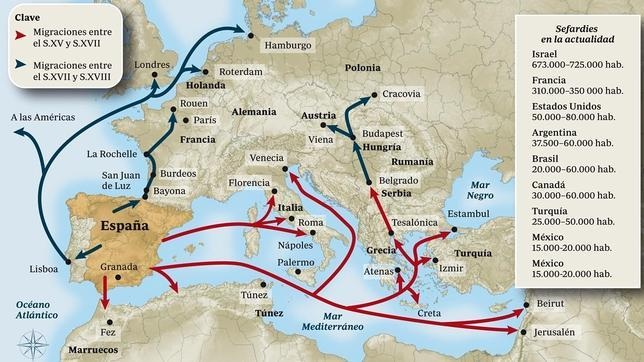
Known variously as Ladino, Judeo-Español, or Djudezmo, the language of Sephardim is at its core a form of 15th-century Castilian Spanish, preserved and transformed through five centuries of contact with the languages of the communities among which the Sephardim lived. The linguistic composition of Ladino reflects the full itinerary of the Sephardic diaspora, enriched over centuries through contact with Turkish, Greek, Italian, French, Arabic, and Balkan languages. Today, Ladino is classified by UNESCO as an endangered language. The urgency surrounding its documentation and celebration has intensified in recent decades, as the generation of native speakers grows smaller, and the Sephardic song repertoire—one of Ladino’s primary vehicles of transmission—becomes ever more precious.
As ethnomusicologist Susana Weich-Shahak mentions in her article, The Performance of the Judeo-Spanish Repertoire, the traditional, secular Sephardic song repertoire can be organized into three main genres: romances, coplas, and cantigas, each of which reflects a different dimension of Sephardic communal life. Romances are narrative ballads rooted in the world of medieval Spain, comprising tales of knights and prisoners, faithful and unfaithful lovers, queens and exiles. Remarkable, communities that had not set foot in Spain for centuries continued to sing these stories in Ladino, keeping alive a cultural memory of a world that had vanished. These songs are among the most extraordinary artifacts of Jewish oral tradition. Coplas, on the other hand, are strophic poems linked to the Jewish calendar and communal life, focusing on holidays, moral themes, stories of biblical figures, and significant community events. This genre flourished especially in the 17th and 18th centuries and reflects the musical influence of the surrounding cultures where each Sephardic community had settled. Meanwhile, cantigas are the most eclectic of the three, freely absorbing whatever musical world surrounded them at a given moment, whether it may be Ottoman melodies, Balkan dance rhythms, operetta, foxtrot, or tango. Their subject matter tends to be largely lyrical: love, longing, courtship, mourning, etc. Cantigas demonstrate successfully that the Sephardic musical tradition was never frozen in 1492, but it continued to evolve, absorb, and create across every century of its diaspora experience.
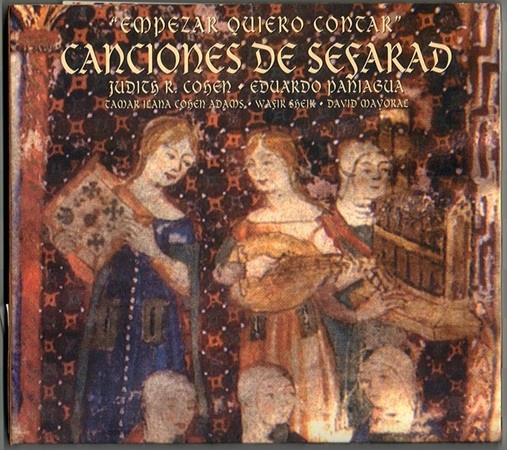
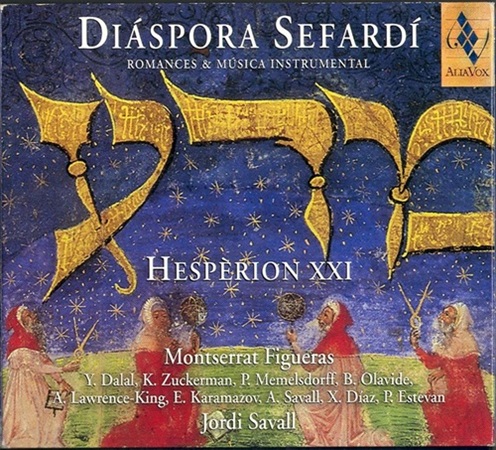
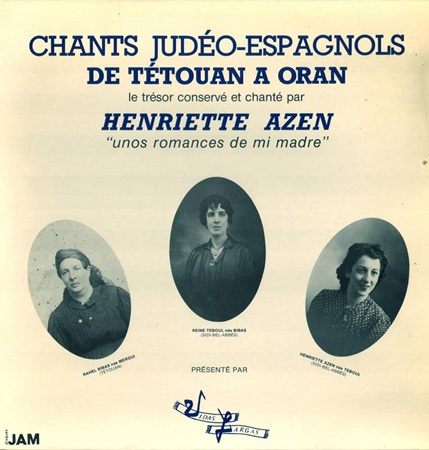
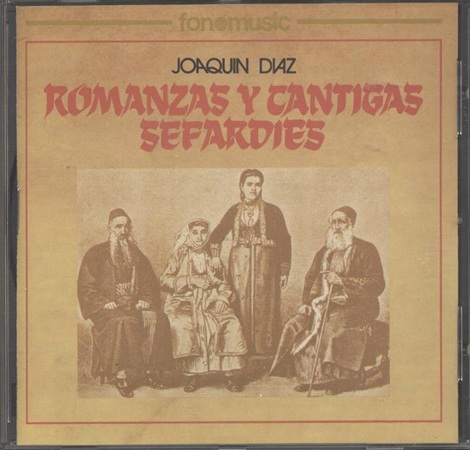
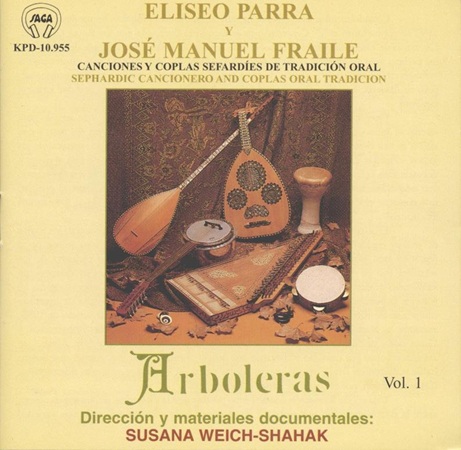
What all three genres share is the centrality of oral transmission. These songs were rarely written down; they were learned by ear, reshaped by individual singers, and often varied considerably from one community to the next. Therefore, the ‘same’ song might sound quite different in Istanbul, Thessaloniki, or Amsterdam, each version bearing the musical imprint of the environment in which it had lived and grown.
The Folklorist Movement and Collection of Sephardic Music
The transformation of this living oral tradition into a collected, written, and publishable repertoire began in the second half of the 19th century, driven by two parallel forces.
The first stemmed from the broader European nationalist and folklorist movements. Since the Romantic period, scholars, composers, and cultural nationalists across Europe had been turning to folk music as a primary source of national and ethnic identity. The Brothers Grimm had done for fairy tales what others were now doing for songs: treating oral traditions as irreplaceable cultural documents that modernity threatened to erase. Composers such as Bartók and Kodály in Hungary, Vaughan Williams in England, and the group of Russian composers known as The Five (Balakirev, Borodin, Cui, Mussorgsky, and Rimsky-Korsakov), exemplified this spirit by collecting folk melodies and weaving them into sophisticated classical compositions. Folk music was no longer seen as merely popular or simple; it was the authentic voice of a people.
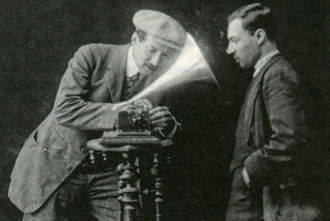
The second force was the Jewish cultural revival of the late-19th and early-20th centuries. Inspired by the Russian nationalist model, young Jewish composers in the Russian Empire began to direct serious attention to Yiddish folk music, driven by what musicologist James Loeffler has described as “a particular commitment to representing Jewish identity in music.” They collected thousands of Yiddish folk songs and brought them into the concert hall. This Jewish national movement created the conditions for a parallel, if less widely known, awakening in the Sephardic world. By the early decades of the 20th century, the systematic collection of Sephardic songs, which were long preserved only in the memory of individual singers, had become an urgent scholarly and cultural project.
The Principal Collectors and Composers of Sephardic Art Song
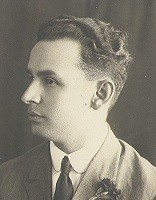
The central figure in the transformation of collected Sephardic folk songs into composed Western classical works is Alberto Hemsi (1898-1975). Born in Cassaba (present-day Turgutlu), near Izmir in Turkey, to Italian parents, Hemsi studied at the local Alliance Israélite Universelle school before receiving a scholarship from the Musical Israelite Society of Izmir in 1913, which sent him to the Royal Conservatory of Milan. After completing his studies there in 1919, he returned home. It was there, hearing his grandmother sing old Sephardic melodies, that he understood the urgency of preserving this oral heritage before it disappeared.
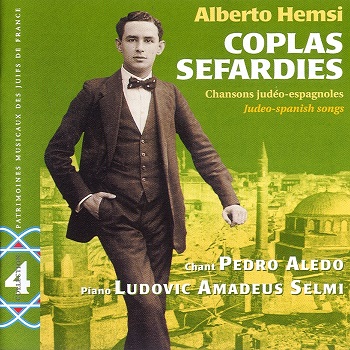
Beginning around 1920, Hemsi traveled through Izmir, Rhodes, Thessaloniki, Jerusalem, and Alexandria, where he conducted his most intensive ethnographic fieldwork, transcribing Sephardic folk songs directly from community members. He then proceeded with something unprecedented: he arranged approximately sixty of those songs with sophisticated Western classical harmonies for voice and piano, and published them between 1933 and1973 as his Coplas Sefardies (Opp. 7, 8, 13, 18, 22, 34, 41, 44, 45, and 51). Often referred to as the Turkish Béla Bartók, Hemsi is arguably the founding figure of the Sephardic Art Song genre.
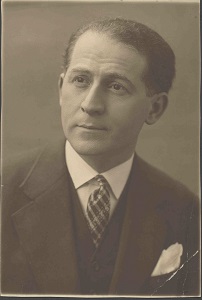
Hemsi’s work was accompanied and followed by other important collector-composers. Léon Algazi (1890–1971), also features in the June 25 concert, brought a very different but equally remarkable path to the Sephardic repertoire. Born in Romania into a Sephardic family, he studied composition with Arnold Schoenberg in Vienna before settling in Paris, where he trained in the counterpoint and fugue at the Conservatoire under André Gédalge, alongside Darius Milhaud. Drawn to Jewish folk music from early in his career, closely following the work of Abraham Zvi Idelsohn, the father of Jewish musicology, Algazi published his Quatre Mélodies Judéo-Espagnoles in 1951, and later compiled the anthology Chants séphardis (London, 1958), cementing his role as both a composer and a dedicated collector of the Judeo-Spanish tradition.
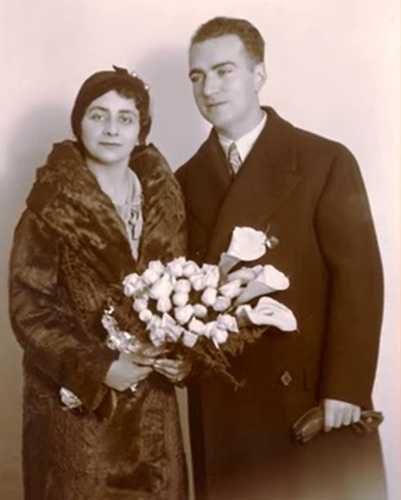
Beyond these pioneering figures, dozens of composers across the Jewish world and beyond were drawn to the Sephardic repertoire throughout the 20th century. Spanish composer Joaquín Rodrigo (1901–1999), best known internationally for his Concierto de Aranjuez, came to the Sephardic repertoire through a combination of cultural and deeply personal motivations When the Spanish folklorist Ramón Menéndez Pidal suggested that he engage with Sephardic ballads, Rodrigo first composed a choral work, Dos Canciones Sefardíes del Siglo XV (1950), before completing his Cuatro Canciones Sefardíes (1965) for voice and piano. The Ladino texts for the latter were adapted by his wife, Victoria Kamhi (1905-1997), a Turkish pianist of Sephardic descent born into a cosmopolitan Istanbul Jewish family, who was fluent in the language. The work was premiered by Venezuelan soprano Fedora Alemán in November 1965. Rodrigo dedicated its opening song Respondemos, a prayer of supplication, to Victoria’s father Isaac Kamhi, a gesture described by James Loeffler as one of posthumous reconciliation, since Isaac Kamhi had opposed to his daughter’s marriage to a non-Jewish Spaniard. The set thus carries within it a deeply personal history of interfaith encounter, alongside its broader significance as a musical reconnection with the Judeo-Spanish heritage that Spain had expelled five centuries earlier.
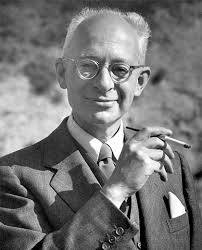
Mario Castelnuovo-Tedesco (1895-1968) was a Florentine composer of Sephardic Jewish descent, whose engagement with his Jewish heritage was sparked by a profoundly personal discovery: many years after the death of his maternal grandfather, he found a small notebook in which the latter had written down the music of several Hebrew prayers. This discovery, which Castelnuovo-Tedesco described as “one of the most profound emotions of my life—a precious heritage,” inspired his first Jewish composition in 1925 and set the course for a lifetime of works rooted in Jewish themes. Forced to leave Italy in 1939 due to Mussolini’s antisemitic racial laws, he settled in Hollywood, where he taught at the Los Angeles Conservatory of Music and composed music for over two hundred films, influencing a generation of Hollywood composers including Henry Mancini, Jerry Goldsmith, and John Williams. His Three Sephardic Songs for voice and piano (or harp) were composed in 1949 and published in 1959. His granddaughter Diana Castelnuovo-Tedesco is currently collaborating with the EIJM on a new edition of the music score—a generational act of transmission that mirrors, in miniature, what the Sephardic tradition has always been about.
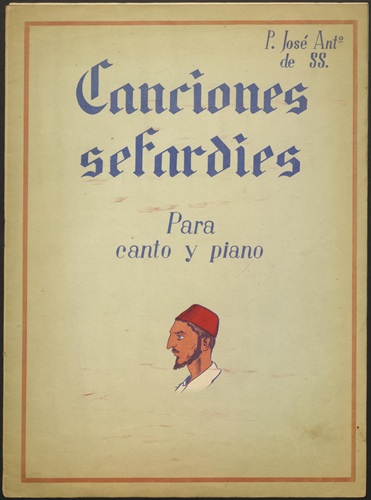
Research has now identified at least forty-seven Western classical composers from Turkey, Israel, Spain, Italy, France, Germany, Bulgaria, the United States, Canada, Puerto Rico, and beyond, who have arranged or composed over 360 vocal works drawing on Sephardic folk songs and Ladino texts. The composers include names as diverse as Jose Antonio de Donostia (1886-1956), Joaquin Nin-Culmell (1908-2004), Matilde Salvador (1918-2007), Yehezkel Braun (1922-2014), Jules Levy (1930-2006), Manuel García Morante (b. 1937), Daniel Akiva (b. 1953), Roberto Sierra (b. 1953), Betty Olivero (b. 1954), Ofer Ben-Amots (b. 1955), and Osvaldo Golijov (b. 1960), each bringing a distinct musical voice to the same extraordinary source material. Together, they have created what may be termed Sephardic Art Song: a genre that is at once an act of cultural preservation, a dialogue between oral and written traditions, and a living body of music for the concert stage.
Sonic Ruins
There is an inherent tension in what these composers did. Writing a Sephardic folk melody down for piano and classically trained voice inevitably changes it: the microtonal inflections of the Middle Eastern modal system cannot be reproduced on a piano; the free, improvisatory rhythms of oral performance are constrained by notation; the melismatic ornaments that gave the original songs their expressive depth are either simplified or lost. As Catalan composer Manuel García Morante once remarked, the ornaments were “meant to be sung in free and flexible rhythm, in accord with the style,” and yet, the score renders them fixed.
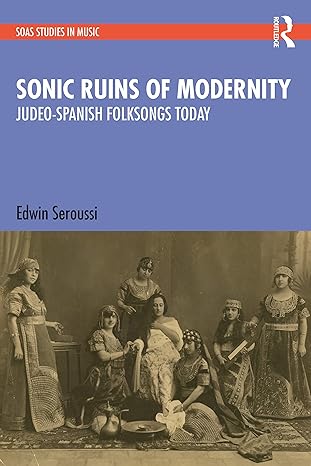
Musicologist Edwin Seroussi has described Sephardic songs as sonic ruins: cultural artifacts that, like architectural ruins, are regularly visited by those seeking to connect with a history that no longer exists in its original form. The metaphor is apt. The songs of the Sephardim have outlived the communities that first sang them, the contexts in which they were performed, and in many cases, the speakers of the language in which they were written. And yet they persist—reconstructed, preserved, and cared for by archivists, arrangers, performers, and the descendants of those original communities scattered across the globe. The Sephardic Art Song genre is, in this sense, not a betrayal of the oral tradition but its continuation by other means. It is an attempt to carry a fragile heritage into new contexts, new ears, and new generations.
Seroussi has also written of what he calls Ladinostalgia: the affective relationship of a small, global community to a heritage it knows it is losing, and the way music serves as a vehicle for maintaining connection to a shared past across the distances of diaspora. These are, at their core, questions not only about music, but about memory, identity, and the human need to preserve what time and history threaten to extinguish.
The songs survive. The task of scholarship, and of the performers who bring them to life, is to ensure that the cultural history they embody survives with them. That is precisely what the June 25 concert at the National Archives invites us to witness, and to celebrate.
Sources:
- Loeffler, James. “From Biblical Antiquarianism to Revolutionary Modernism: Jewish Art Music, 1850-1925.” The Cambridge Companion to Jewish Music. Joshua S. Walden, Ed. Cambridge, United Kingdom: Cambridge University Press, 2015, pp. 167-186.
- Seroussi, Edwin. “Jewish Music and Diaspora.” In The Cambridge Companion to Jewish Music, edited by Joshua S. Walden. Cambridge Companions to Music. Cambridge: Cambridge University Press, 2015, pp. 27-40.
- Seroussi, Edwin. Sonic Ruins of Modernity: Judeo-Spanish Folksongs Today. SOAS Studies in Music. London and New York: Routledge, 2022.
- Şen, Lori. “Sephardic Art Song: From Folk Roots to Classical Heights,” Journal of Singing 81, no. 4 (March/April 2025): 405–417. https://doi.org/10.53830/sing.00112
- Şen, Lori. Sephardic Art Song: A Musical Legacy of the Sephardic Diaspora. DMA dissertation, University of Maryland, College Park, 2019.
- Toledano, Haim Henry. The Sephardic Legacy: Unique Features and Achievements. Scranton and London: University of Scranton Press, 2010, pp. 5-10.
- Weich-Shahak, Susana. “The Performance of the Judeo-Spanish Repertoire.” The Performance of Jewish and Arab Music in Israel Today. Amnon Shiloah, Ed. Musical Performance, Vol. 1, Pt. 3. Amsterdam: Harwood Academic, 1997, pp. 9-26.
- Weich-Shahak, Susana. “The Traditional Performance of Sephardic Songs, Then and Now.” The Cambridge Companion to Jewish Music. Joshua S. Walden, Ed. Cambridge, United Kingdom: Cambridge University Press, 2015, pp. 104-118.
________________________________________________
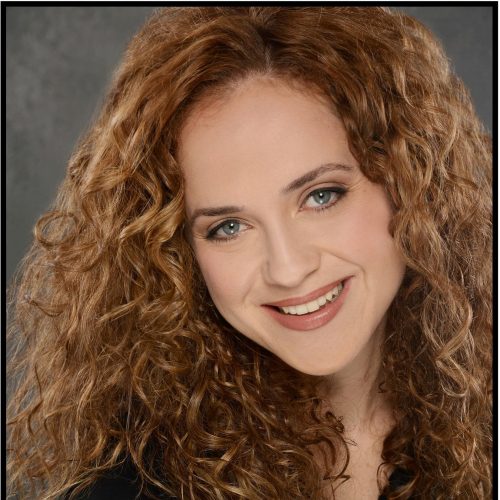
Lori Şen is a Turkish mezzo-soprano, Fulbright alumna, and leading scholar of the Sephardic Art Song genre. She is Assistant Professor of Vocal Pedagogy at Shenandoah University and on the voice faculty at the Peabody Institute of Johns Hopkins University. She is the first researcher to catalogue the complete Sephardic Art Song repertoire and to create a Ladino lyric diction guide for singers. Her Doctor of Musical Arts dissertation, Sephardic Art Song: A Musical Legacy of the Sephardic Diaspora (University of Maryland, College Park, 2019), is the foundational scholarly work on this genre. For more information: www.lorisen.com