By Alain Poirier
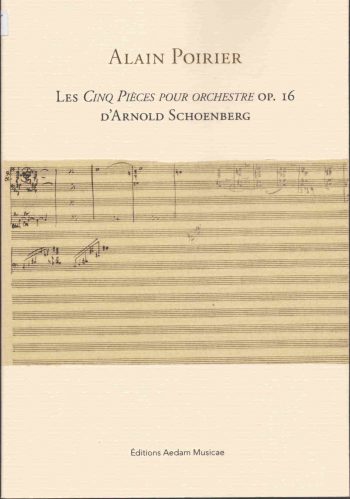
The Aedem Musicae just published a study by Alain Poirier dedicated to the Five pieces for orchestra op. 16 by Arnold Schoenberg. An occasion to plunge into the artistic and cultural context of the year 1909, and to understand this surprising work by Schoenberg.
Regularly presented as one of the most surprising works of the rich period preceding 1914, the Five pieces for orchestra op. 16 by Arnold Schoenberg continue, along with Erwartung, Stravinsky’s Rite of Spring and many other works by Debussy or Bartók, to fascinate the listeners and composers one century after their creation. Related to the most famous artists of his time, Strauss, Mahler, Busoni or Kandinsky, Schoenberg did in 1909 a dive into the unknown when Freud, Klimt or Musil explored the mysteries of the unconscious. Music and painting share this search of new expression, among which the third piece « Farben », features one of the greatest demonstrations.
The first part of the book traces the artistic and cultural context of the year 1909. The second part is dedicated to the five pieces.
Purchase the book
Listen to the radio podcast Arnold Schönberg’s Jewish musical work, produced and hosted by Hervé Roten, with Danielle Cohen-Levinas