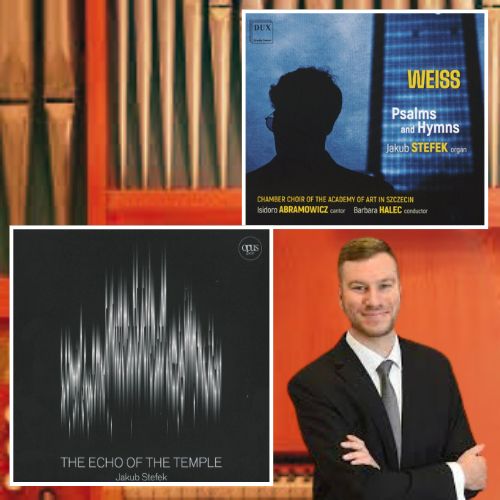
CD Weiss – Psalm and Hymns, released on November 3, 2023, by DUX Recording Producers
CD The echo of the Temple, released on November 9, 2023, by Opus Series – Requiem Records
In March 2025, Polish musicologist and organist Jakub Stefek donated two CDs and a 33-rpm record to the European Institute of Jewish Music. The recordings are the result of his research on synagogue music in Poland and its composers, both past and present. Discover the works of Jakub Weiss, Adam Porębski, Aleksandra Chmielewska, Anna Maria Huszcza, Darius Przybylski, Marcin Tadeusz Łukaszewski, and Ignacy Zalewski.
 The CD Weiss – Psalms and Hymns features the world premiere of works by Jacob Leopold Lejb Weiss (1825–1889), cantor of one of Warsaw’s synagogues in the 19th century. Born in 1825 in Nitra (Hungary), Jacob Weiss studied music in Vienna, in particular with the composer and cantor Salomon Sulzer (1804-1890), one of the initiators of the reform of liturgical singing in Reform synagogues. In 1860, Weiss became the principal cantor of the German synagogue on Danilowiczowska Street in Warsaw. There he conducted a choir with which he sang psalms and hymns accompanying daily prayers. It was probably during his ministry in this synagogue that Weiss had the opportunity to become familiar with the music of Polish composer Stanislaw Moniuszko.
Moniuszko’s influence on Weiss’s compositional language is significant. Furthermore, this music shares characteristics with reformed synagogue music, which broke with rabbinical religious rules and allowed instruments, including the organ, to be used. In 1873, Weiss took up a position as cantor in Vilnius before returning to Warsaw three years later. In 1879, he became a singing teacher, while continuing his activities as a cantor and composer. Although his music was widely performed, he fell into poverty and died on August 21, 1889. His work continued to be performed in synagogues and private homes until World War II, before falling into oblivion. To date, Weiss’s only known compositions appear in a collection entitled Musikalischen Synagogen-Bibliothek: Ozar Schire Jeschurun in two volumes published in 1873 and 1881.
In addition to Weiss’s works, this CD features four preludes by Joseph Sulzer, the youngest son of Salomon Sulzer.
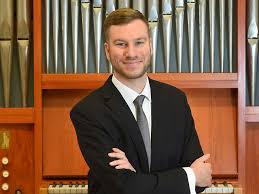 In this CD, the organ is played by Jakub Stefek, organist at the Pestalozzistrasse Synagogue in Berlin and author of a publication on Jewish music for organ. The cantor solos are performed by Isidoro Abramowicz, music director at the Pestalozzistrasse Synagogue in Berlin and one of the most important performers of synagogue music. The Chamber Choir of the Academy of Fine Arts in Szczecin is conducted by Barbara Halec
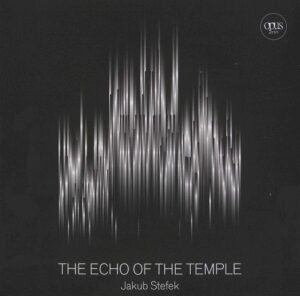 The CD The Echo of the Temple is the result of Jakub Stefek’s commission of organ pieces referring to the synagogue tradition from six contemporary composers: Adam Porębski, Aleksandra Chmielewska, Anna Maria Huszcza, Marcin Tadeusz Łukaszewski, Dariusz Przybylski, and Ignacy Zalewski.
“In the 19th century, the idea of Jewish liturgical reform was for composers to take old Jewish melodies and combine them with a contemporary musical language. When I learned about this history, among other things, while working on my PhD paper, I thought that the next chapter of this history, interrupted by war times, would be to recreate this process today, in the 21st century”, explains Jakub Stefek.
“This is how a long-term project was born, in which six prominent and award-winning Polish composers of the younger generation created works according to this idea. Each approached the theme in a different way. Adam Porębski worked on songs by Abraham Lichtenstein, a Szczecin cantor from the 19th century: first in a version for cantor, choir and organ, and later for solo organ. Aleksandra Chmielewska and Dariusz Przybylski have created impressive works that are based on two Kaddish melodies noted down by Louis Lewandowski. Anna Huszcza chose Louis Lewandowski’s melody from three monumental volumes, writing a tribute to the organ tradition. Marcin Łukaszewski combined two of the world’s most famous Jewish melodies, Kol Nidre and Hava Nagila, creating a bridge between the sacred and the profane. Ignacy Zalewski, in a highly personal work, shifted the focus from melody to timbre, going in the direction that Jewish organ music was beginning to take shortly before before World War II. The very title ‘Echo of the Temple’ has multiple meanings. On the one hand, it refers to the earliest accounts of the instrumentation of the Jerusalem Temple. On the other, the many Reform synagogues in which the organ sounded were given the name ‘Tempel’. Furthermore, the material was recorded in the sumptuous interior of the Stargard Collegiate Church, the highest vaulted Gothic church in Poland, so the echo is integrated into the artistic sound design.
This is an album that makes a very strong reference to a heritage that we should pay attention to. Jewish organ music is proof that it is possible to skilfully combine tradition and modernity. There is a sweet spot between blocking out everything that is new and rejecting everything that is old.”
- Learn more or order the CD Weiss – Psalms and Hymns
- Learn more or order the CD The Echo of the Temple
- Read the review of the LP Music of David Eisenstadt
- Read the article The organ in the Jewish tradition

Listen to extracts below