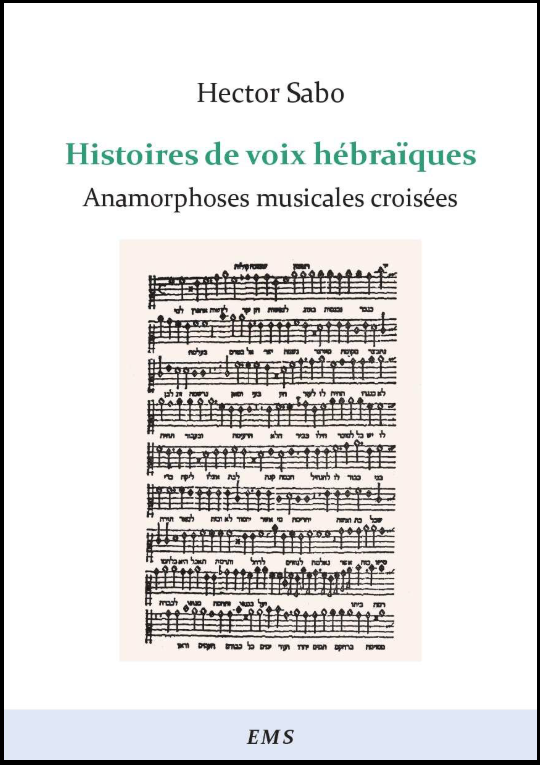
Stories of Hebrew Voices
Crossed musical anamorphoses[1]Deformed image produced by a curved mirror.
By Hector Sabo
© 2024, Editions Musicales Sabo
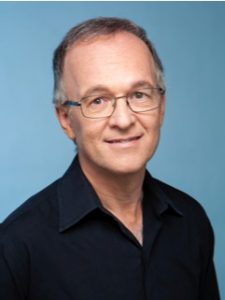
Composer, musician and choirmaster, Hector Sabo has devoted a significant part of his career to Hebrew music, a term he associates with music sung in Hebrew or associated with the Hebrew people.
In this one-hundred-page work, the author offers a more synthetic and accessible approach to what he partially presented in his first book, Voix hébraïques – Voyage dans la musique juive d’Occident (Hebrew Voices: A journey into Western Jewish music, with analysis and musical examples (in French)), published in 2020. Each chapter is short (3-4 pages on average) and factual. For the uninitiated, the 1st prologue recalls the history of the Hebrews and their language. The 2nd prologue is devoted to the musical relationship between Christianity and Judaism. And it is at the end of this prologue and at the beginning of the introduction that the author defines the main subject of his book, which is “to trace the course of this fascinating musical dialog (…) between two musics, one Jewish, the other Christian” (p.14). The book is thus “an introduction to Hebrew music (…) in close connection with European music” (p. 17).
Having limited the geographical scope of his approach to Western music, Hector Sabo offers a thematic and chronological tour in 16 chapters, from the music of the Temple of Jerusalem to contemporary music in France. The 17th chapter offers a selection of Hebrew psalms set to music since the Middle Ages. Finally, the conclusion – apart from the inevitable summary – expands the field of possibilities to include film music and musicals with a Jewish theme.
 In short, with the exception of a 2-page chapter on Hebrew-language Israeli music, this book presents Western Jewish music in its relationship to the surrounding Christian society. This journey through time and space alternates historical and musicological facts with the author’s often interesting reflections on his practice of Hebrew music. There are, however, a number of approximations and even errors, such as the reference on p. 29 to “manuscripts of music from the Jewish communities of Normandy” that were supposedly used in the recording of the CD Juifs et trouvères produced by the IEMJ[2]The music on the CD Juifs et trouvères comes from Hebrew manuscripts from northern France (Flanders, Picardy, Artois, Champagne…) that do not contain musical notation. In two of these … Lire la suite. It should also be noted that the author rarely cites his sources. For example, when Hector Sabo claims on p. 38 that Beethoven received a book of Hebrew melodies from Salomon Sulzer that inspired him to use the Kol nidré theme in his 14th quartet, this version is far from unanimous among musicologists. Similarly, the author notes that in the musical West Side Story, Leonard “Bernstein wanted to tell in music his personal version of a story inspired by Shakespeare’s Romeo and Juliet, in which the characters are not Irish and Puerto Rican, as the definitive version intended, but Jewish and Arab…” (p. 80). (p. 80). If we refer to Laurent Valière’s broadcast on France Musique in 2021 and Charlotte Landru-Chandès’ article “West Side Story: everything you always wanted to know about Bernstein’s work”, this assertion would be dubious, to say the least.
Apart from these few reservations, the book is a pleasure to read and makes one want to know more about Jewish music. It also introduces us to lesser-known works, such as the magnificent Five Hebrew Love Songs by American composer Eric Whitacre.
- Order the book
- Learn more about Hector Sabo
- Listen to Hector Sabo’s Ledor Vador radio broadcastsl
- Listen to Hector Sabo’s lecture on The Voice in the Ashkenazi Liturgical Tradition
- Browse the CDs Musiques juives hébraïques et sacrées et profanes au Moyen Age, XIX et XXe siècles (Musiques juives hébraïques et sacrées et profanes au Moyen Age, XIX et XXe siècles (Hebrew Jewish Music, Sacred and Secular in the Middle Ages, 19th and 20th Centuries) and Chants et Emotions (Songs and Emotions)
| 1 | Deformed image produced by a curved mirror. |
|---|---|
| 2 | The music on the CD Juifs et trouvères comes from Hebrew manuscripts from northern France (Flanders, Picardy, Artois, Champagne…) that do not contain musical notation. In two of these manuscripts, the copyist indicated in the margin of the text the title of a trouvère song to which the religious poetry was to be sung. |